Business platforms and internal systems
Approvals, records and audit trails for the work your team does every day.

Customer portals, internal platforms and SaaS products, built around roles, approvals and a record of every decision, then handed over so your own team can run them.
These are the six kinds of web application development we are asked for most. We have built platforms, portals, SaaS products, APIs and CMS-run websites for government, healthcare, retail and nonprofit clients, and for ourselves — and we have taken on an app somebody else started and carried it forward.
Approvals, records and audit trails for the work your team does every day.
Each customer signs in and sees their own data, live.
Many customers, one system, with plans and billing built in.
The services behind the screens, and the systems you already run.
Pages your own staff publish and edit, without a developer.
We review what exists, then keep, fix or rebuild it a piece at a time.
Most of what makes web application development expensive is invisible on a screenshot, which is why we point at the systems instead. Each one names the system it was proved on.
Who may see a record, and who may approve it, is settled before anything is drawn, and the server enforces it. ADVETI serves three audiences on one permission model.
Who changed what, when, and what it said before. Added later it tells you nothing about last year, which is the year an audit asks about.
A website, a portal, a staff console and an app are four views of the same data. One back end serves them all, so a rule changes once, not four times.
Long lists, searches and reports slow down on the data you will have in three years, not the data you launch with. We build them for the bigger number.
We ran a vehicle-tracking platform for three years after building it, and a healthcare client still has us looking after theirs. Handing over is equally fine.
We choose the tools to suit the project, and everything here is something we have used on real work. We also write code the next developer can pick up, because a system like this usually outlasts the team that built it.
If your team already uses one of these, we work in it. And if your project needs something that is not on this list, tell us — we will look at it and give you a straight answer on whether we are the right people for it.
No two web application development projects cost the same, and what moves the price is usually not what people expect.
Handed over at the end of the build.
Quoted with the build, or added later.
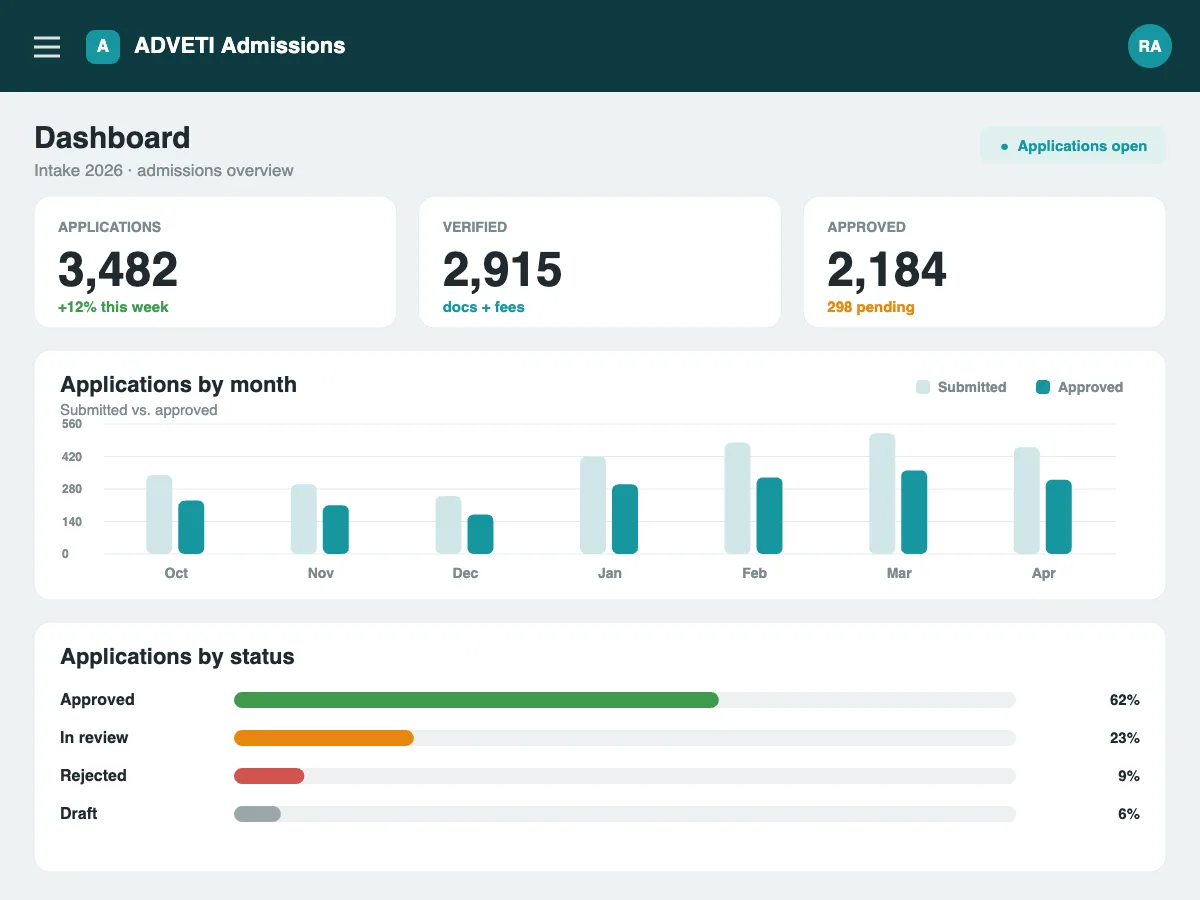
A complete admissions and management platform for a government institute in Abu Dhabi. It includes a public website, an applicant portal and a staff console.

The public website, custom CMS and internal management system for Pakistan’s 24-hour helpline for missing children. It has report forms, a public gallery of posters, news and media, and a CMS that the team manages themselves.
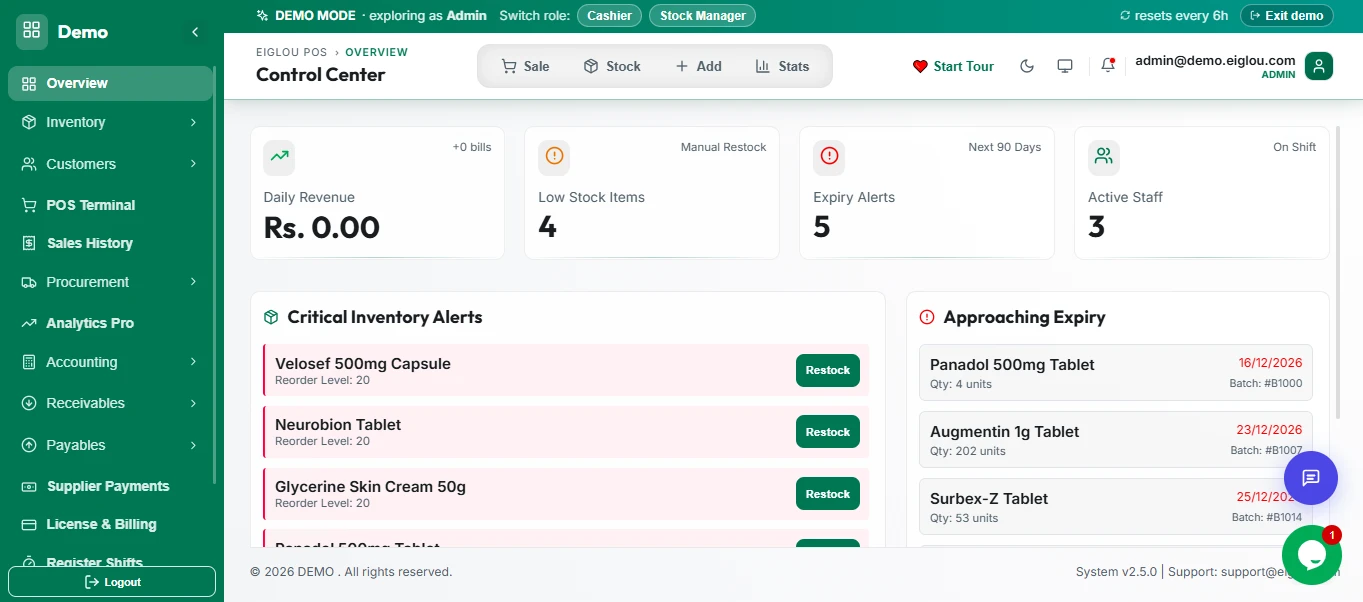
Eiglou POS is a point of sale and stock system for retail stores, including pharmacies. It handles fast billing, batch and expiry tracking, purchasing, accounts and daily reports from one control center.
The whole engagement was refreshingly smooth. The admissions and management platform did exactly what was promised — document checks, fee verification, approvals, all of it — delivered on time and properly documented. A team that clearly knows what it’s doing.
We learn who will use the app, what they need to do, and what data it must handle.
We plan the pages, the data and the user roles together, and start with the smallest version that works.
We build in small steps and show you working pages regularly, so you can give feedback early.
If you want us to, we host and monitor the app, keep it updated and secure, and fix problems as they appear.
It depends on what you need, but usually two to three months for a first release people can do real work in. We would rather get that into your hands than hand you everything six months later. What goes into it is agreed with you first, and it is normally the one or two things your team does most.
As much as you want, and it is worth settling early. Content, pages and users are normally yours to manage yourselves. Rules, roles and workflows are normally ours to change, because getting one of those wrong causes a lot more trouble than a typo does.
The screens that get slow are the long lists, the searches and the reports. They slow down on the data you will have in a few years, not the data you start with, so we build and index those parts for the bigger number from day one.
Usually, yes. If your system already has an API, we use it. If it has no API but one can be built for it, we build that. And if it is completely closed, we will tell you early rather than discover it halfway through. Whichever it is, the part that matters most is agreeing which system owns each piece of information, so the two never disagree with each other.
Yes, and most of our work goes that way. On a fleet-tracking platform we built, the client kept coming back with new requirements as they grew, and we added them a piece at a time over three years. Growing later is much cheaper when the first version was built expecting it, so we plan for that from the start even when it is not in the first release.
Yes, if that is what you want. We can host it, keep it updated and fix things as they come up, for as long as you need us. And if you would rather your own team ran it, that is just as fine — we set it up so they can.
You hand it over. The accounts are already in your name and the code is already yours, so there is nothing for us to release and nothing locked to us. If you want written handover notes for whoever takes it on, tell us and we will include that in the work.
Still deciding? Tell us what you are building and we will tell you what the first release should be, and what it would take.
Tell us about your web app project. We will reply with what we would build first and what it would involve.