Designs handed to developers
Screens are signed off before anyone checks the data can support them.
Engineers are in the design conversation, so what is drawn is what is built.

One partner for the whole product: the database, the APIs, the web and mobile screens, the cloud it runs on, and the people who keep it running after launch.
Because what goes wrong is rarely inside one supplier's part — it is in the hand-overs between them, and those belong to nobody.
Screens are signed off before anyone checks the data can support them.
Engineers are in the design conversation, so what is drawn is what is built.
One side waits on an endpoint, the other builds against a guess.
One shared set of types, so the halves meet daily, not in integration week.
Deploying is a person, not a pipeline, and nobody owns the first incident.
Pipeline, monitoring and backups exist before the first feature does.
Six things: shaping and architecture, back end and APIs, web front ends, mobile apps, cloud and release, and security and support. We build the first feature end to end — the screen, the API behind it and the data underneath — instead of building each part separately and joining them up at the end.
What the first release has to do, and the architecture it needs.
Services and APIs built to survive an integration going down.
The screens people use, quick on ordinary connections.
iOS and Android from one codebase, tested on real devices.
Infrastructure in code, and a pipeline that deploys every change.
Access control, audit trails, and someone to call after launch.
The dates move with the size of the build — a single integration is live sooner, a regulated platform takes longer. The order does not move: infrastructure before features, and one feature through every layer before any layer is built out. Yours is agreed in discovery, before anything is committed to.
The first release agreed, the data model drawn, the pipeline and staging standing before any feature is written.
One feature all the way through, proving the whole machine works while it is still cheap to change.
Features in your priority order. You use each one as it lands and re-order what follows.
Load and security testing, compliance work if it is needed, store submissions and a rehearsed restore.
After launch we either run it with you or hand it over with walkthroughs and a runbook. Both are priced before the build starts.
One platform we run uses Java, Laravel, Angular and Flutter — each layer has a different job. The constant is who is accountable for all of it, not the language.
This is what we build on, and the list is deliberately short. If your own team already runs one of these, we work in it; if a project needs something we do not run, we will say so.
Most full-stack development projects run in one of four shapes. Most start with the first, and you are never asked to commit to a full build before anyone has looked at the product properly.
The workflows the product has to support and the screens they add up to, the systems it has to talk to, the number of user roles and approval paths, how much old data has to move, and whether it has to meet a standard — HIPAA, GDPR or SOC 2, say.
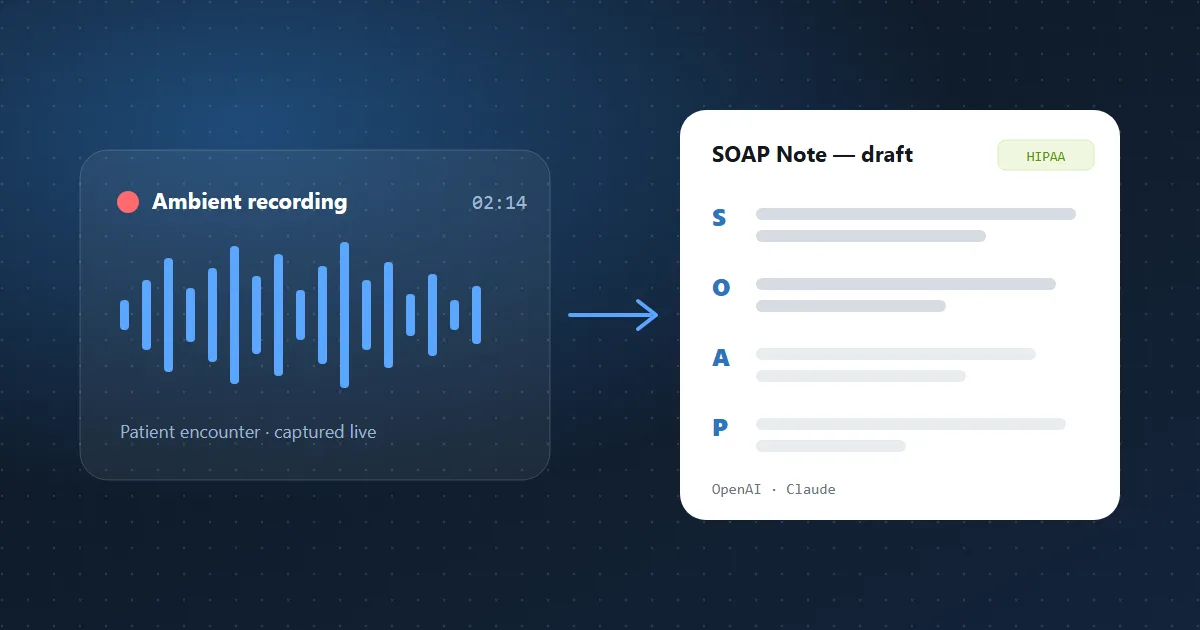
An AI scribe that listens to patient visits and writes clinical notes for the doctor to review. It includes templates, letters, coding support and a full HIPAA compliance programme.
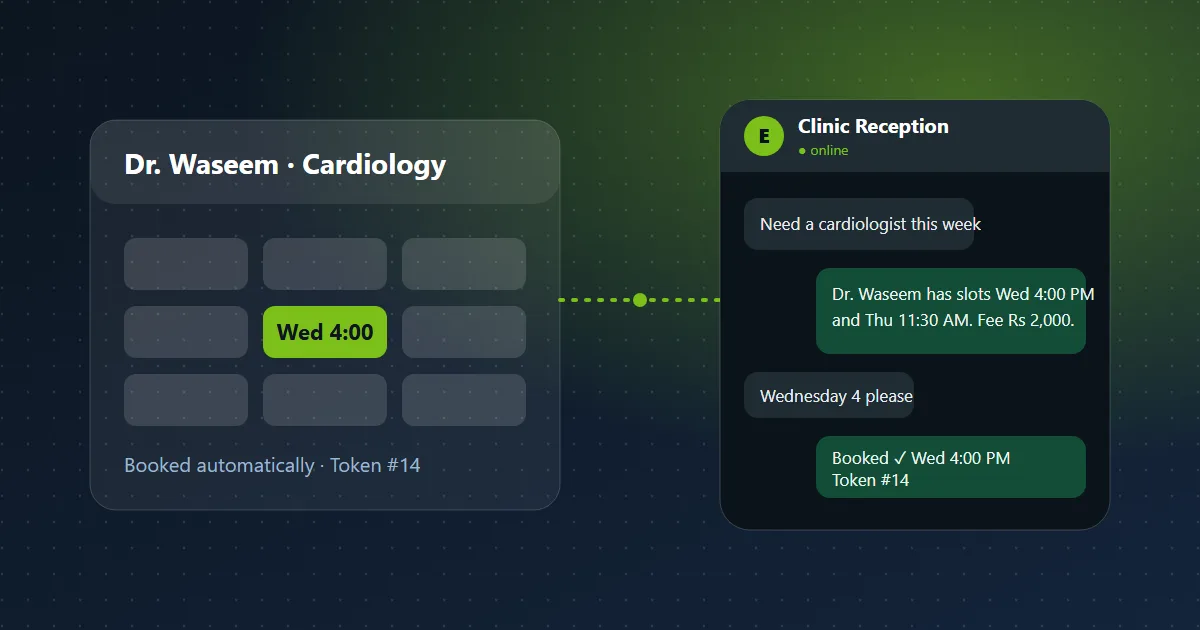
An AI agent on WhatsApp that answers patients in Roman Urdu, Urdu and English. It books, cancels and reschedules appointments by itself, at any hour, and connects to a full hospital management system.
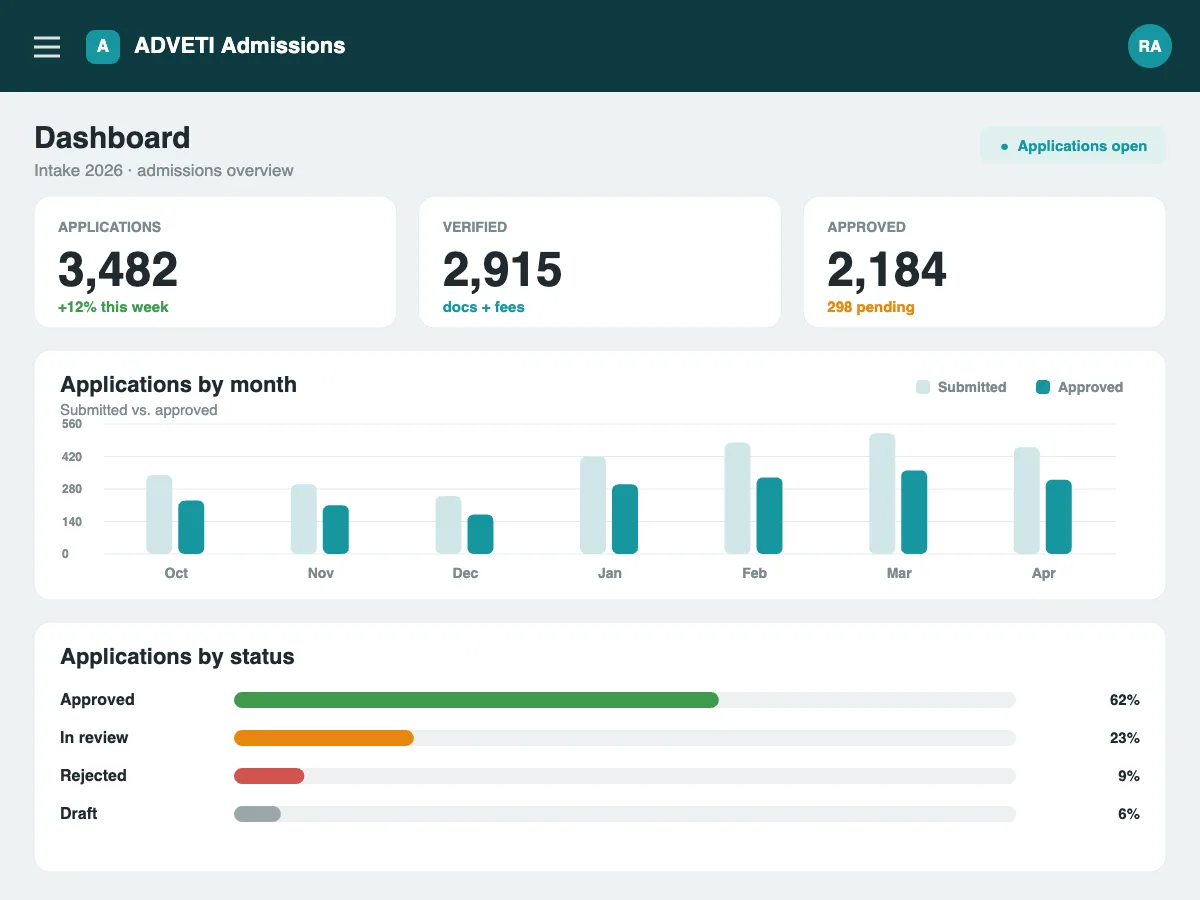
A complete admissions and management platform for a government institute in Abu Dhabi. It includes a public website, an applicant portal and a staff console.
They built our product carefully and got the hard parts right — the architecture, the HIPAA work, and the way the AI is put together. It was done well, and they still look after it for us.
That we take on the whole product — the database, the APIs, the web and mobile screens, the infrastructure — rather than one layer of it. One plan, one schedule, and one party accountable for all of it.
Often, yes. We review the code, the data and the hosting, write down what is risky, then improve it in steps. A rewrite is a last resort, not our opening offer.
Within reason. We work in a short list of stacks we already run in production, and choose per project rather than applying one answer to everything. If what you need sits outside that list, we will say so rather than learn it on your budget.
You do. Source code and IP are assigned to you in the contract, the private repository transfers with its full history, and cloud accounts can be in your name from day one with us operating them.
Yes. We run healthcare software under a full HIPAA programme managed through Vanta, and built the admissions platform for a vocational institute in Abu Dhabi. Access control, audit trails and security questionnaires are familiar ground.
Still deciding? Tell us what you are building and we will tell you what the first release should be, and what it would take.
Tell us about your full-stack project. We will reply with what we would build first and what it would involve.